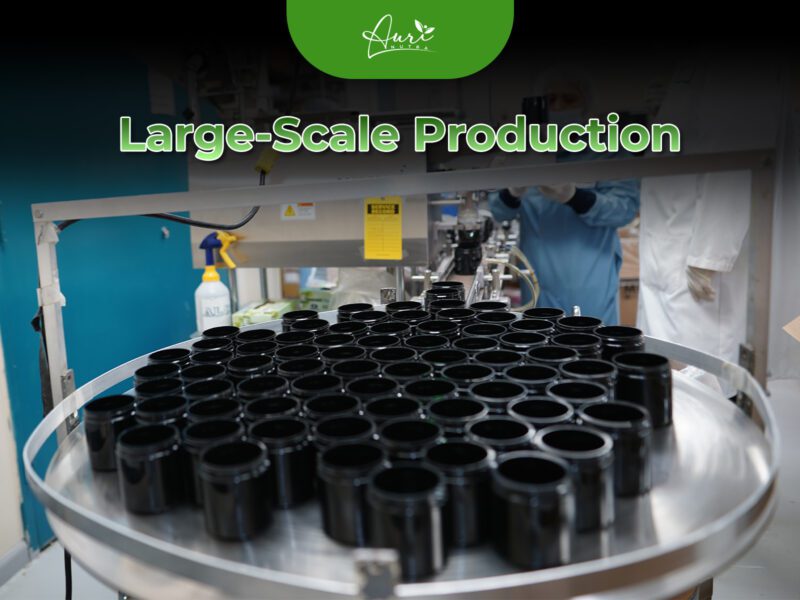
When launching a new product, many supplement brands begin with smaller production runs to manage budget constraints and test market demand. If the initial response is strong, the next question is when and how to scale up to larger volumes. This guide provides a practical framework for assessing whether your brand is ready to take that next step and move into higher-volume production. Here are the key steps to help determine whether you’re prepared for larger-scale manufacturing.
Assessment of Your Current Market Position
Before moving forward, it’s important to take a clear look at where your brand stands today. That perspective will help you determine whether scaling up is the right next step. Here are a few factors that can help you better evaluate your current position:
- Sales Volume and Growth Trajectory
When reviewing sales trends, pay close attention to monthly performance. Are sales rising steadily, or do they fluctuate with certain seasons? It also helps to understand whether growth is being driven by a promotion, advertising campaign, or organic demand.
Consistent growth is often a strong sign that it may be time to increase production volume. At the same time, it’s important to look beyond your current numbers and consider broader industry trends and market forecasts. That perspective can help you judge the long-term potential of your supplement and shape a smarter scaling strategy.
- Distribution Channels
You can think of distribution in two broad ways: online-only and brick-and-mortar retail. Many brands begin online because it’s a more accessible way to launch, but limited physical availability can sometimes hold sales back.
If your supplement shows strong demand, it may be worth exploring partnerships with retailers and distributors. That path typically requires more inventory, more logistics, and greater investment, but interest from a major retailer can also be a useful signal that your brand may soon need higher production volume.
- Customer Feedback & Demand
Listening to your customers is one of the most effective ways to evaluate your product’s performance. Surveys, direct feedback, and customer comments can help you identify areas for improvement, while also confirming when a supplement is meeting expectations.
Subscription data can be especially useful for measuring demand. If your active subscriber count is steadily increasing, that’s often a strong sign that it may be time to raise production volume.
Operational & Financial Considerations
Increasing production volume requires a larger capital commitment, so it’s important to weigh the higher upfront cost against the impact it may have on marketing and other operational needs. If your brand has enough financial flexibility, larger orders can improve efficiency and deliver better value over time.
Inventory management is just as important. You’ll need enough storage space for incoming batches, but you also want to avoid running out of stock, which can hurt sales and customer trust. Using forecasting tools can help you plan inventory more effectively and decide whether your brand is ready for a larger production run.
Supply Chain Resources
A smooth supply chain is essential for large-scale production. To keep operations running efficiently, it’s important to evaluate a few key factors before increasing volume.
- Raw Material Availability
If your formula requires large quantities of specific ingredients, you’ll want to confirm that dependable sources are in place. Even a short disruption in ingredient availability can affect production and cut into profit. - Lead Times and Logistics
Make sure the manufacturer can meet the expected turnaround time for larger orders. As volume increases, order complexity usually does too, so it’s important to confirm that the logistics work well for both sides. - Backup Suppliers and Risk Management
Relying on a single supplier can create unnecessary risk. Having backup sources in place can help you manage shortages or disruptions more effectively, and diversifying manufacturing locations can add another layer of protection.
Quality Assurance & Consistency
If your product is selling through each production batch, that’s a strong sign the market is responding well. Still, maintaining quality and consistency becomes even more important as volume increases.
At larger scale, product integrity depends on having the right facilities, trained staff, and manufacturing equipment in place. The manufacturer should also be able to maintain proper production practices without compromising standards.
Regulatory and compliance checks matter as well, especially if you plan to expand into new markets. Following the applicable industry requirements and pursuing relevant certifications can reinforce your commitment to quality. Standards such as FDA, GMP, and NSF are often worth noting.
Brand & Marketing Readiness
Even the best product needs strong branding and a clear marketing plan to succeed at scale. As production grows, a broader distribution strategy becomes just as important as product quality.
Packaging and labeling also need to be ready for mass distribution. That means making sure your printing setup can handle the increased volume, and considering whether you need multilingual labels, bar-codes, or shelf-ready packaging to support wider roll-out.
Make the Transition
You can take either a phased or full-scale approach when moving to larger production. A phased transition lets you increase output gradually while monitoring demand, which helps limit risk and control investment. The trade-off is that if demand grows faster than expected, you could miss out on additional sales.
A full-scale transition, on the other hand, means increasing volume right away. This can work well if your supplement is seeing rapid growth or if you’ve secured a strong retail partnership. The upside is greater profit potential and faster expansion, but the risk is carrying more inventory than you can sell before it expires.
As you make this move, choosing the right manufacturing partner is essential. It’s a good idea to compare several manufacturers and evaluate their technology, capacity, experience, and overall reliability. You’ll also want to review contract terms and payment expectations to make sure they fit your budget and long-term plans.
Final Thoughts
Moving a supplement brand into mass production is a significant step, and it should be approached with care. Before making the leap, it’s important to evaluate your product’s current market position, confirm that demand is strong enough, and make sure you have the capital to support larger-volume production.
Once those pieces are in place, you can begin planning the transition and aligning your internal teams around the next phase of growth. It’s also important not to overlook the financial impact of scaling up. A thoughtful, structured approach will help support a smoother transition while preserving product quality and integrity.
Auri Nutra Inc. Is a Leading Dietary Supplement Contract Manufacturer in NYC
Auri Nutra Inc. As a trusted contract supplement manufacturer in New York City, Auri Nutra is equipped to support your large-order needs. We can deliver finished goods in bulk or provide bulk supplement pieces, depending on your production requirements.
We also offer an extensive catalog of stock formulas you can explore and bring to your brand, or we can work with you to develop a custom formula tailored to your goals.
Getting started is easy — simply complete our request a Dietary Supplement Manufacturing quote form or use our contact us form.