What Is Turmeric Curcumin?
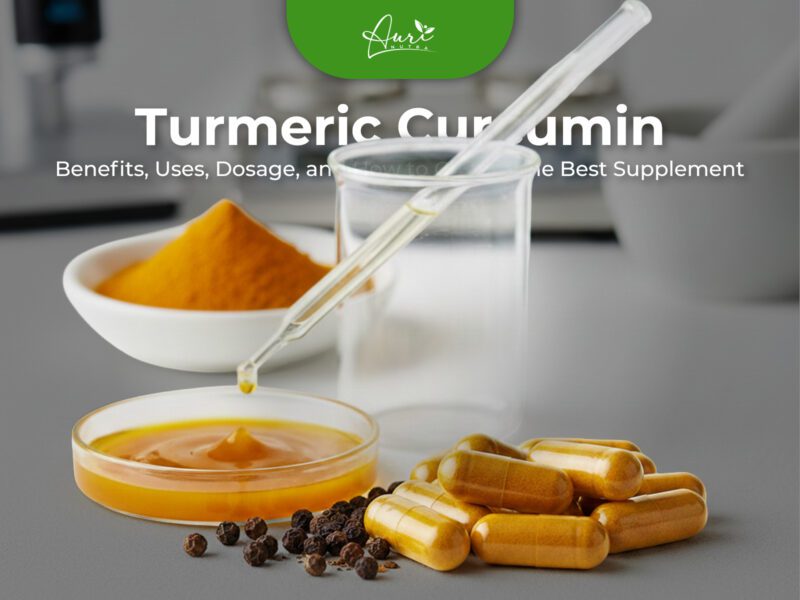
Turmeric curcumin actually refers to curcumin, the main active compound found in turmeric, it is a bright yellow spice made from the root of the Curcuma longa plant. to understand easily you have to know about turmeric and curcumin.
Difference Between Turmeric Root and Curcumin
|
Turmeric |
Curcumin |
| It is the whole spice/root used in cooking and traditional medicine. | Is a natural compound inside turmeric that gives it its color and most of its health benefits. |
| Turmeric is the orange-gold rhizome (root) of the Curcuma longa plant, usually used fresh or dried and ground as a spice. | Manufacturers extract and concentrate curcumin from turmeric into standardized supplements that can provide much higher doses than you’d get from the same amount of turmeric root. |
| Because it is “whole food,” turmeric offers a broader mix of compounds that may work together, and it is commonly used in cooking and traditional medicine for general wellness. | Curcumin is a single plant chemical (a polyphenol) found inside turmeric that gives most of its bright yellow color and many of its studied anti‑inflammatory and antioxidant effects. |
| It naturally contains many components: essential oils (like turmerones), curcuminoids, fiber, and other plant compounds, with curcumin making up roughly 2–9% of the root by weight. | Curcumin on its own is poorly absorbed, so supplements often pair it with piperine, fats, or special formulas (liposomal, nano-curcumin) to improve bioavailability. |
Turmeric contains only 2–5% curcumin, which is why supplements often use concentrated curcumin extracts.
The Way Curcumin Works in the Body
Curcumin is absorbed poorly from the gut, then rapidly transformed and distributed, and it acts mainly by dampening multiple inflammation and oxidative-stress pathways in cells. the active compound in turmeric, acts as a potent anti-inflammatory and antioxidant agent by modulating key signaling pathways , NLRP3, inhibiting pro-inflammatory cytokines and enzymes. While Curcumins natural absorption is poor, it crosses cell membranes easily, and its efficacy is enhanced by bio-availability boosters like piperine.
How Curcumin Works –
Curcumin is a lipophilic polyphenol that modulates various cellular signaling pathways.
- Inflammation Pathway Inhibition:Curcumin acts as a master inhibitor, directly suppressing the nuclear factor kappa-B (NF-κB) pathway, which is responsible for activating genes involved in chronic inflammation.
- Cytokine Regulation:Turmeric Curcumin reduces the production of inflammatory mediators, including tumor necrosis factor-alpha (TNF-α), interleukin-1 beta (IL-1β), and interleukin-6 (IL-6).
- Enzyme Inhibition:It binds to and reduces the activity of pro-inflammatory enzymes, such as cyclooxygenase-2 (COX-2) and 5-lipoxygenase (5-LOX).
- Antioxidant Pathway Activation:Curcumin activates the Nrf2 pathway, which boosts antioxidant defenses and reduces oxidative stress.
- Direct Protein Modulation:Turmeric Curcumin can directly interact with protein kinases, transcription factors, and receptors, such as Toll-like receptors (TLRs), regulating inflammatory responses.
Absorption and Bio-availability
Despite its high potential, curcumin’s therapeutic efficacy is limited by low bio-availability.
- Poor Absorption & Rapid Metabolism:Curcumin has low water solubility and is rapidly metabolized in the liver and intestinal mucosa (phase II metabolism) into glucuronide and sulfate conjugates.
- Rapid Elimination:Turmeric Curcumin is quickly removed from the body, leading to low concentrations in blood plasma.
- Enhancement Strategies:Combining curcumin with black pepper extract (piperine) can increase its bio-availability by up to 2000%. Liposomal, nanoparticle, and phospholipid formulations also significantly improve absorption.
Main Clinical Benefits
- Arthritis:Due to its COX-2 inhibition, Turmeric Curcumin reduces pain and stiffness in osteoarthritis as effectively as some NSAIDs.
- Metabolic & Chronic Health:Turmeric Curcumin helps manage oxidative and inflammatory conditions, including metabolic syndrome, diabetes, and cardiovascular health.
- Muscle Recovery:Turmeric Curcumin reduces exercise-induced muscle damage and soreness.
Health Benefits of Turmeric Curcumin
- Anti-Inflammatory and Antioxidant Properties
- Turmeric Curcumin for Joint and Muscle Health
- Digestive and Gut Health Benefits
- Brain, Heart, and Immune System Support
Types of Turmeric Curcumin Supplements
- Standard Curcumin Extracts
- Curcumin with Black Pepper (Piperine)
- Enhanced Bioavailability Forms (BCM-95, Meriva, Longvida)
- Organic and Whole-Turmeric Supplements
How to Take Turmeric Curcumin Safely
Recommended Dosage for Different Health Goals
Typical turmeric–curcumin doses in studies range from low hundreds to about 2,000 mg curcumin per day, with specific targets and safety always needing medical oversight.
For general health, labels often suggest about 500–1,000 mg per day of turmeric extract standardized to curcuminoids, usually with black pepper or a bioavailability booster, taken with food.
Many clinical trials run for 8–12 weeks; people with gallbladder disease, bleeding risk, or on blood thinners, diabetes drugs, or acid-suppressing meds should always ask a clinician first.
Joint and arthrits support:
- Systematic reviews of randomized trials in arthritis commonly use about 1,000 mg per day of curcumin from turmeric extract, sometimes divided into 2–3 doses.
- Across osteoarthritis studies, effective ranges run roughly 160–2,000 mg curcumin per day, with many trials around 1,000–1,500 mg (often with piperine), showing pain and stiffness relief comparable to NSAIDs in some patients.
Mood (depression and anixiety):
- Turmeric curcumin often use 500-1,000 mg curcumin per day, sometimes it goes to 1,500mg, over 5-12 weeks.
- In the analyses of pooled, higher doses within 500-1,000 mg range and use longer tended to show stronger improvements in depressive symptoms, it’s not a replacement, it usually an add-on to standard treatment.
Blood sugar and Metabolic:
- Meta-analyses in people with metabolic syndrome or cardiometabolic risk report benefits (better fasting glucose, insulin resistance, and cholesterol) with curcumin or curcuminoid doses mostly in the low-to-mid hundreds of mg per day, over at least 8–10 weeks.
Choosing the Best Turmeric Curcumin Supplement
Selecting a turmeric curcumin supplement comes down to label details, quality seals, and the form that fits your habits and does needs
What to Look for on the Supplement Label
- Look for “turmeric extract” standardized with specific curcuminoid percentage(95%)
- Check the list of (curcumin, demethoxycurcumin, bisdemethoxycurumin) curcuminoids and see if bio-availability booster is included.
Importance of Third-Party Testing and GMP Manufacturing
- Third-party testing(USP, NSF, Informed Choice,etc.) confirm the product actually contains the stated ingredients, does and screens for contaminants likehavy metals, microbes, and pesticides.
- Ensure cGMP to ensure USP Verified or NSF indicate the product made facility with regular audits of cleanliness, documentation, and quality control.
- Quality testing reduces the risk of mislabeling or adulteration while choosing a brand. Because turmeric supplements deviate from ideal curcuminoid compositioshow signs of synthetic curcumin.
Who Should and Shouldn’t Take Turmeric Curcumin?
Actuallly most healthy adulth can use culinary turmeric and well-dosed curcumin supplements in a short term. But you know everything is not for everyone. That’s why some people should be very careful with them even some cases it should be fully avoided.
| Who should | Who shouldn’t |
| Adults person without major liver, bleeding, gallbladder or pregnancy-related risks who want additional support for general inflammation or digestion, mild joint pain. | Those with bile duct obstruction, active gallstones, cholangitis, or other biliary disease, because turmeric can increase bile flow and trigger or worsen pain. |
| If you are a person not taking drugs with strong immune-suppressing or narrow therapeutic-index effects, blood-thinning | People with known liver disease or a history of unexplained liver injury, since there are reports of turmeric/curcumin-associated liver problems and regulators advise avoiding these products in such cases. |
| Individuals who tolerate small “test” doeses without stomach upset, rash and who use products below typical label directions rather than very high does. | Anyone with a bleeding disorder or very high bleeding risk, because curcumin can have blood-thinning (antiplatelet) effects and may worsen bruising or bl |